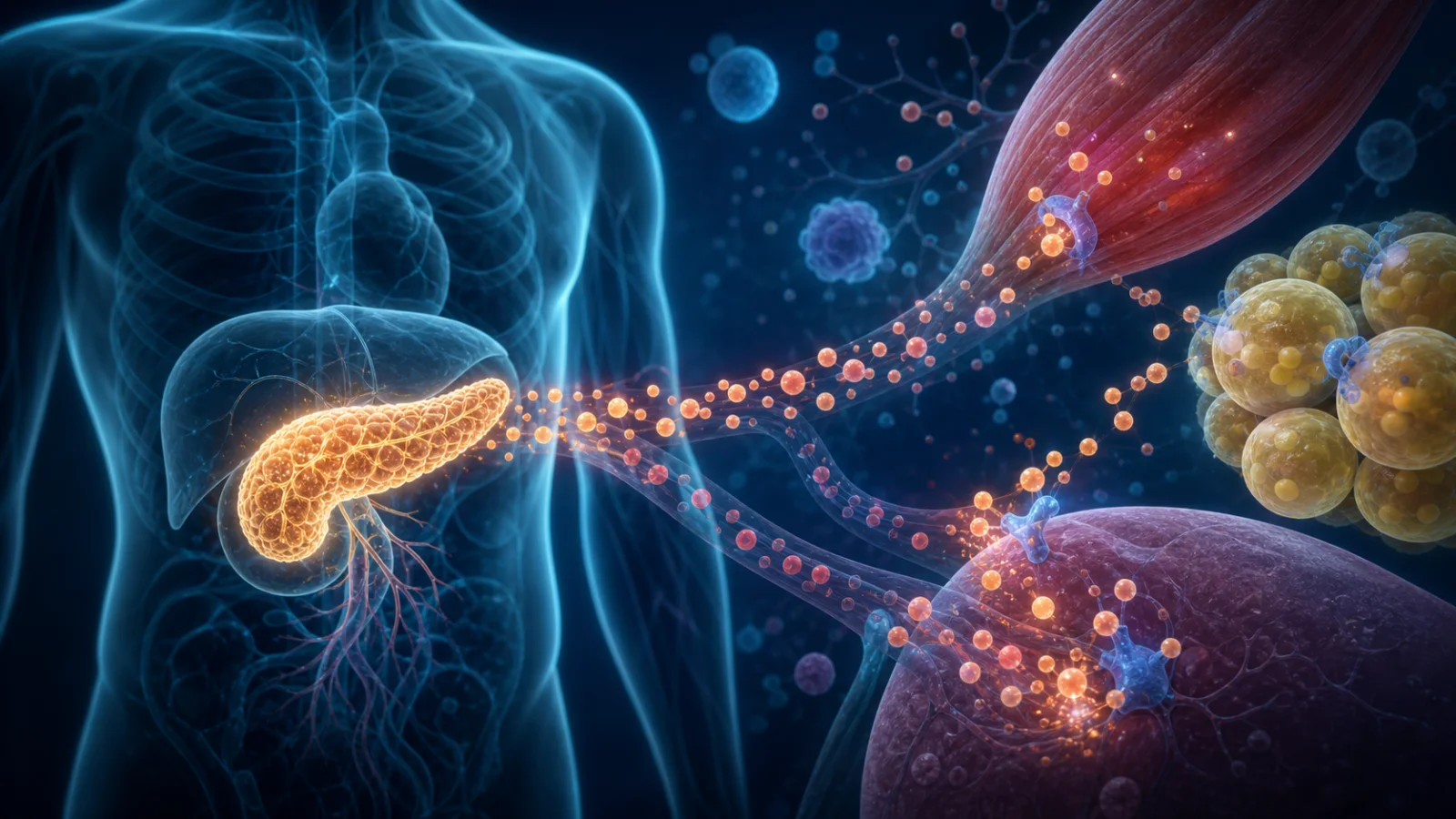
Type 2 diabetes does not start at the exact moment blood sugar suddenly spikes. When muscles, fat, and the liver become less responsive to insulin, the pancreas raises insulin output and can hold glucose in check for a while, but when demand outpaces that output, blood sugar rises. That is why current values alone are not enough, and family history, prior gestational diabetes, weight, and activity level all matter.
Key point When muscles, fat, and the liver do not respond enough to insulin, the pancreas secretes more insulin to keep blood sugar in range. If that compensation lasts too long and the pancreas eventually cannot keep up with demand, glucose rises and Type 2 diabetes can develop.
Source video
The Real Reasons Why Type 2 Diabetes Develops
Watch the full argument in sequence before reading this analysis, and the relationship between insulin secretion and insulin resistance becomes much easier to follow.
What to remember
- The core point is that insulin secretion and resistance can change before blood sugar passes into a high range.
- Increased insulin release and insulin resistance can reinforce each other, increasing stress on the pancreas.
- Preventive evidence is strongest for sustained weight control, regular physical activity, balanced eating, and stopping smoking, rather than focusing on one specific food or ingredient.
- Healthy body weight, regular movement, and balanced meals are the practical foundation for Type 2 diabetes prevention.
Compensation can start before glucose rises
In environments with frequent high-sugar, fructose, and saturated-fat intake, total calories can rise, weight can increase, and insulin resistance can increase. Insulin can stay elevated for a while as the pancreas tries to preserve balance even while values look normal.
The value of this framing is that it does not reduce diabetes to a result of eating sweets only. Blood sugar is a measured outcome; the underlying process is insulin signaling into cells and pancreatic compensation capacity.
Resistance and insufficient secretion overlap
Type 2 diabetes appears when pancreatic insulin production is insufficient and muscle, fat, and liver cells also respond poorly to insulin. Reduced cellular response is what we call insulin resistance.
When insulin sensitivity declines, the pancreas initially produces more insulin as compensation, but if demand keeps growing it eventually cannot maintain control and blood sugar increases. High insulin can be seen as an early compensatory response, but it should not be treated as the only cause.
The sequence is not one-directional
The video emphasizes that the pancreas can increase insulin output before glucose is in the diabetic range. As insulin signaling becomes less effective, more insulin is needed to hold levels stable, and a prolonged high-output state increases pancreatic burden.
Insulin overproduction and insulin resistance are better understood as mutual feedback, not a one-way chain. Blood glucose tests show where one is in that long process, and risk factors like family history, weight, and activity should be considered together.
How fructose and saturated fat add metabolic load
The video explains that frequent high intake of fructose and saturated fat can raise metabolic load in the liver and fat tissue. When this pattern leads to calorie surplus and weight gain, conditions that promote insulin resistance may emerge. The NIDDK and WHO also cite obesity, low physical activity, and genetic factors as contributors.
The same intake does not affect everyone equally; family history, age, fat distribution, sleep, activity, medicines, and coexisting conditions change risk. Prevention is more realistic through a broad shift in activity, body composition, and lifestyle rather than removing one specific nutrient.
Most robust prevention message
In prevention trials reviewed by the National Institute of Diabetes and Digestive and Kidney Diseases, high-risk participants who lost 5 to 7 percent of body weight through regular activity had lower progression to Type 2 diabetes. WHO similarly highlights healthy weight, at least 150 minutes per week of moderate activity, healthy eating, and smoking cessation.
These numbers are not prescriptions to apply uniformly. If diabetes is already diagnosed or medication is being used, weight-loss or exercise plans should be coordinated with clinicians to avoid hypoglycemia and to adjust for comorbidities.
When to seek consultation can differ even with similar glucose values
Suppose two people have the same fasting glucose. One has family history and prior gestational diabetes and recently reduced activity. Another has no major risk factors and was tested after temporary sleep deprivation. A single number cannot make a diagnosis, but the first person usually has stronger reasons for earlier clinical evaluation.
A practical order is: confirm symptoms, review risk factors like family history and activity history, choose appropriate glucose testing with a clinician, then plan behavior changes based on results. If there are symptoms such as thirst, frequent urination, or unexplained weight loss, do not delay. If diabetes medication is already being used or hypoglycemia risk exists, avoid generic diet/exercise advice without clinician adjustment.
Review information
- Evidence checked
- 2026-08-05
Limitations: This is general educational information and does not replace personal diagnosis, test selection, or medication, eating, and exercise advice.
When to stop or seek care: Do not delay care for thirst, frequent urination, or unexplained weight loss. If you use diabetes medication or have a risk of hypoglycemia, consult your clinician before changing fasting, meals, or exercise.
Notes
- Source video: Dr. Dingyo, "The Real Reasons Type 2 Diabetes Starts," published 2026-07-14, 32 minutes 17 seconds.
- Checked: 2026-07-28. This is for educational purposes and not medical diagnosis or treatment; individual decisions should be made with healthcare providers.
Sources
- Source material: Source video analyzed
- Official evidence: NIDDK: Symptoms and causes of diabetes
- Official evidence: CDC: Type 2 diabetes
- Official evidence: WHO fact sheet on diabetes
- Official evidence: WHO: Healthy diet
- Official evidence: NIDDK: Diabetes Prevention Program
- Official evidence: NIDDK: Diabetes tests and diagnosis